Picture this.
The creator sends the first draft. Your product lead adds six comments. Your brand lead adds nine. Someone who missed the brief now wants a completely different opening.
Congratulations. Your simple product demo has become a group project.
Before you blame the creator, open the brief. Did it actually tell them what mattered?
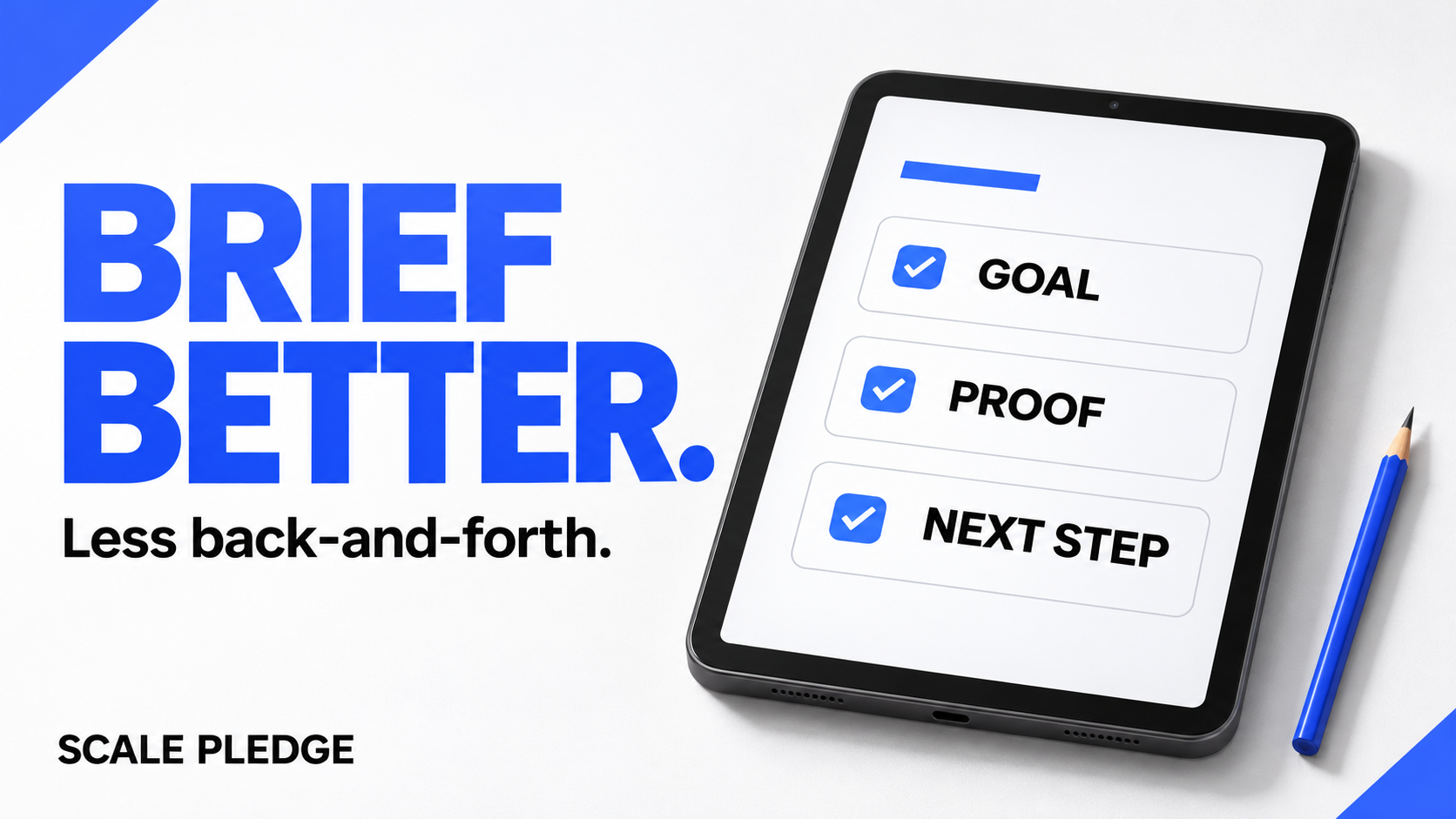
Here is a practical way to brief a tech creator. The goal is to make the important parts clear while leaving room for the voice you hired them for.
Give the video one main job
“Drive awareness, traffic, trials, sales and community growth” sounds great in a meeting. It gives a creator very little help when they need to choose an opening.
Pick the main action you want a suitable viewer to take.
For example: “Show small agency owners how to build a client report, then invite them to try that workflow.”
That is a made-up example, not a Scale Pledge result. Notice how it names the viewer, the task and the next step. The creator can build an idea around it.
Creators interviewed by Think with Google recommend focused goals and room to use their own style. Those interviews offer useful firsthand guidance, not proof that a particular brief will increase sales.
Split the brief into must-haves and choices
Put the items that need to be correct in one short section:
Product name and the exact plan or model being shown.
The key feature to explain, with a source the creator can check.
Limits that matter, such as device support or a paid-plan requirement.
The agreed offer, link and call to action.
Sponsorship disclosure requirements, checked for the relevant market and platform.
Agreed deliverables, review dates and launch date.
Then say what the creator can choose: their opening, examples, wording, pace and filming style.
Do not hide a strict demand inside a casual suggestion. If a line must be read exactly, mark it clearly and explain why. If it is only an idea, call it an idea.
Give them something worth showing
“Our software saves time” leaves a lot to the imagination.
Give the creator access to a real task they can test. For a reporting tool, that might mean building a sample report using dummy data. For a device, it might mean showing the setup process and the ports a buyer will actually use.
Add the login or sample access through a secure channel. Include a working test account, the right product version and one contact for product questions.
Do not ask the creator to repeat a result they have not experienced. If you want a claim about speed, savings or performance, provide the evidence and its limits. A tidy demo is useful. A made-up benchmark is not.
Agree on the idea before the full edit
A short outline can answer three useful questions before filming:
What problem will the opening show?
What will the viewer see the product do?
What should the viewer do next?
Check that outline against the brief. This is a suggested workflow, not a guarantee of fewer revisions. It gives both sides a chance to catch a mismatch before more work is done.
YouTube's Brand Deal Desk series includes a section on staying creative while meeting a brief and handling brand feedback. The tension is real enough to deserve its own lesson. Your process should make room for both.
Send one set of clear feedback
Choose one person to collect your team's comments. Resolve conflicting requests before sending them to the creator.
Replace “make it punchier” with something they can act on:
“The first 20 seconds explain the company. Could we open with the unfinished report instead, then show how the tool handles it?”
Separate factual fixes from personal taste. A wrong price needs fixing. Your colleague preferring a different adjective is a different conversation.
Agree on review rounds and what counts as a change in scope before production. Do not wait until the finished video to introduce a new feature, audience or offer.
Copy this brief outline
Viewer: Who is this for, and what are they trying to do?
Goal: What is the main next step?
Demo: What task should the product help them complete?
Checked facts: Which claims, plan details and limits must be accurate?
Must-haves: What needs to appear, including the agreed disclosure and link?
Creative room: What can the creator decide?
Review: Who gives feedback, by when, and how many rounds are agreed?
Launch: When does it go live, and who checks the final links?
Before sending it, ask one last question: could someone film a useful first version from this brief without guessing what you meant?
If not, fix the brief now. The group project can wait.
Need help coordinating a tech creator campaign? See how Scale Pledge works.